
You’ve probably told your child to study hard so they’ll “do well in life.”
But what if some of the best life lessons don’t come from books alone?
What if they come from trying out a mini business at home, whether that’s selling cupcakes to neighbours, running a toy swap, or creating an online shop for their art?
Entrepreneurship doesn’t have to mean raising the next Richard Branson. For children, it’s about learning how to solve problems, get creative, manage money, and bounce back when things don’t go as planned.
And research shows that children who try out entrepreneurial activities early on grow in confidence, resilience, and practical know-how that supports them in school and beyond.
This guide gives you practical, age-appropriate entrepreneurship ideas you can try with your children at home, divided into two groups: primary (ages 5–11) and secondary (ages 11–16).
Some are short weekend projects; others can run for weeks. All of them are designed to be fun, hands-on, and packed with learning.
Entrepreneurship Ideas for Students in Primary School (Ages 5–11)
At this age, keep activities simple, playful, and hands-on. The goal is to spark curiosity and help them see how ideas can turn into action.
1. The Lemonade Stand Challenge (One Day)
Set up a small table in the garden or driveway, mix up a batch of lemonade, and invite neighbours to stop by.
Materials: Lemons or juice, sugar, cups, a table, and a homemade sign.
Learning: Money handling, greeting customers, and confidence in talking to people.
Why it works: Research-backed programmes like Citrus Saturday use lemonade stands to teach primary children the basics of enterprise, with impressive results in confidence and teamwork.


2. Bake Sale Bonanza (Weekend)
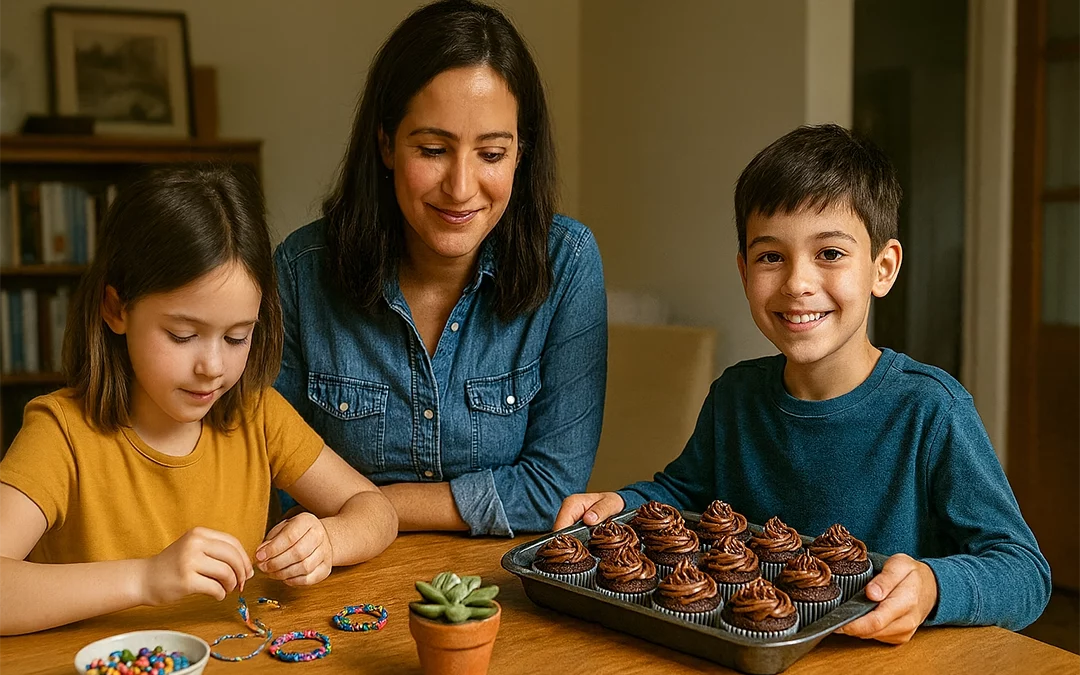
Turn baking into business. Bake a batch of cupcakes or cookies and sell them to friends, neighbours, or family.
Learning: Planning, budgeting, food prep, and presentation.
Conversation starter: Ask your child what they’d do differently next time: a bigger cake? Different flavours?
This reflection builds problem-solving skills.
3. Homemade Crafts Market (Ongoing)
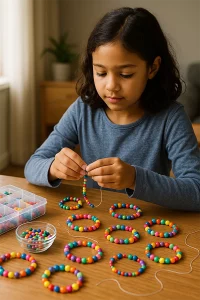
Got a creative child? Help them design friendship bracelets, bookmarks, or painted rocks to “sell” at home or gift to family.
Learning: Creativity, marketing, and feedback (“Which bracelet did Grandma like best?”).
Tip: Photograph their products and make a simple “catalogue.”
It’s a playful way to introduce digital skills.

4. Toy & Book Shop or Swap (One Afternoon)
Encourage decluttering by letting kids set up a shop to sell or swap gently-used toys and books.
Learning: Value, negotiation, and organisation.
Extra layer: Donate leftovers to charity, introducing empathy and social responsibility.
5. Green Thumb Enterprise (4–8 Weeks)
Grow herbs, veggies, or flowers, then sell bunches or potted plants.
Learning: Patience, science, and reinvestment (profits can buy more seeds).
Bonus: Kids love watching their efforts literally grow.

Entrepreneurship Ideas for Students in Secondary School (Ages 11–16)
Older kids can take on bigger, more independent ventures. These projects build responsibility and often involve real customers.
1. Pop-Up Shop Day (Weekend)
Let your teen sell home-baked goods, upcycled fashion, or collectibles at a car boot sale or community market.
Learning: Market research, sales, and customer service.
Tip: Have them track what sold best. That’s a real lesson in demand.
2. Service Business Trial (One Week)
Encourage them to offer dog-walking, car washing, or tutoring.
Learning: Work ethic, pricing, and time management.
Why it matters: Teens who try services gain responsibility and decision-making skills that boost employability.
3. Dragons’ Den Family Challenge (One Week)
Give your teen a week to develop a business idea and pitch it to the family as “investors.”
Learning: Innovation, public speaking, and persuasion.
Tip: Use play money for extra fun — and consider investing in their idea if you’re impressed.
4. The £10 Tenner Challenge (4 Weeks)
The teen version of the Fiver Challenge: £10, one month, one goal: make a profit.
Learning: Budgeting, resilience, adaptability.
Evidence: The Tenner Challenge has been shown to improve creativity and problem-solving in UK secondary pupils.
5. Online Business Launch (Multi-Week)
For tech-savvy teens: set up a small Etsy shop, eBay account, or blog.
Learning: Digital literacy, marketing, customer service.
Safety tip: Oversee accounts and help with privacy settings.
6. Content Creator Project (3+ Months)
Encourage your teen to start a YouTube channel, podcast, or blog about something they love.
Learning: Communication, consistency, and tech skills.
Reality check: It’s less about “going viral” and more about learning how to share ideas and build an audience.
7. Summer-Long Neighbourhood Service
A seasonal “startup” like lawn care, babysitting, or tutoring younger kids.
Learning: Time management, financial literacy, and building client relationships.
Life lesson: Long-term responsibility — a powerful precursor to part-time work or future careers.
How You Can Support Them
- Keep it fun. Let their interests drive the idea — art, cooking, tech, or animals.
- Be a mentor, not a manager. Offer advice but let them make choices (and mistakes).
- Set clear boundaries. Be present at public-facing sales, and supervise online projects for safety.
- Use existing programmes. Look into the Fiver and Tenner Challenges (Young Enterprise UK) or community initiatives like Citrus Saturday.
- Reflect together. After each project, talk about what worked, what didn’t, and what skills they’ve built.
Whether they’re running a lemonade stand, designing bracelets, or starting an online shop, the true value lies in the qualities they develop: confidence, creativity, resilience, and independence.
So why not pick one activity from this list and give it a try this month? The profits might be small, but the lessons, and the smiles, will last a lot longer.

Diana Pineda is an entrepreneur, educator, and author passionate about reimagining education for the next generation. She is the founder of Rhema E-School and NovaQuest Academy. She holds an MBA in Marketing from the University of Greenwich, England. She is a graduate of Universidad Externado de Colombia with a degree in Finance and International Relations and a specialist in Pedagogy and Didactics from Universidad de Medellín.