
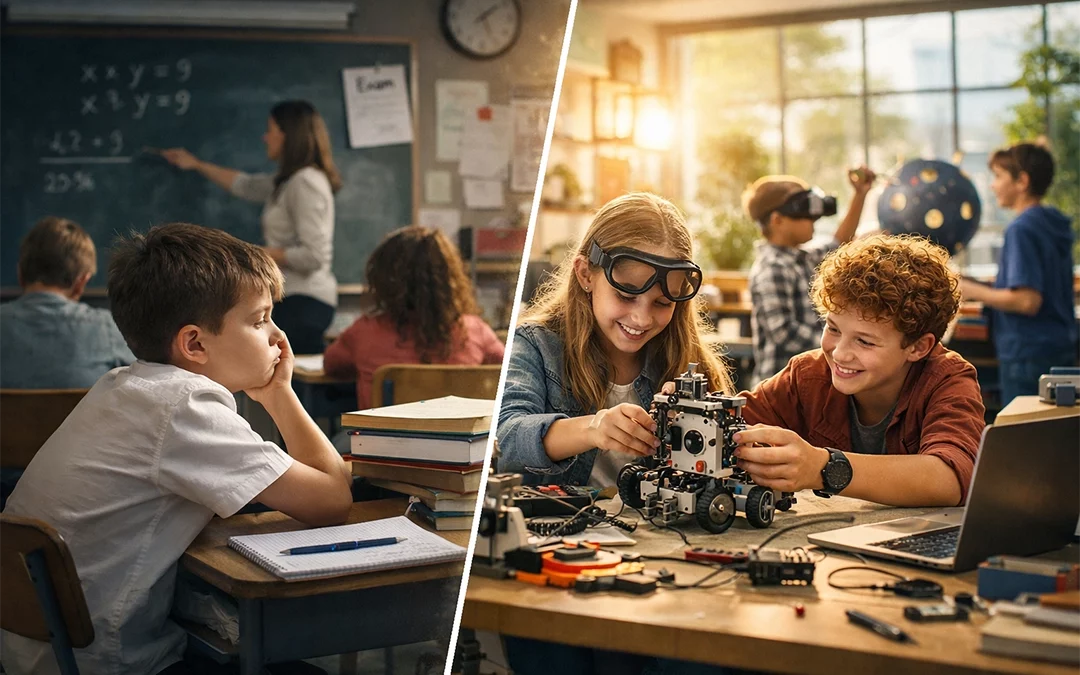
Parents don’t usually start searching for alternative education because they dislike schools.
They start searching because something in their child quietly stops working.
- The spark fades, and they disengage from classes.
- Curiosity disappears, and they become bored.
- Homework becomes a daily battle, and parents need to help their children until 10 pm.
- Confidence declines, and they are unsure whether they can deliver meaningful results.
If you are here, you probably don’t want a better school.
You want a different way of learning.
This article explains (clearly, honestly and in very simple terms) why traditional education no longer fits many children today, and what we are building instead at NovaQuest Academy, a full-time alternative online school launching in September 2026 for 40 students only in our first year.
What is considered traditional education and traditional teaching?
Traditional education is the dominant school model most families recognise:
- Fixed curriculum
- Age-based year groups
- Subject timetables
- Teacher-led lessons
- Grades and exams are the main outcome
It was designed to be scalable, standardised and easy to manage.
It was never designed to adapt to individual children.
Traditional teaching is mainly:
- The teacher delivers the content
- The class listens
- Students practise
- Students are tested
Learning flows in one direction. Children are receivers, not designers of learning.
What is the difference between traditional education and what children actually need today?
Most parents say they want their children to grow up with:
- Confidence
- Critical thinking
- Creativity
- Communication skills
- Emotional intelligence
- Digital skills
- Resilience
Traditional education, however, still optimises for:
- Memory
- Speed
- Compliance
- Exam performance
The gap is not small. It is structural.
We need a different type of learning to keep our children engaged and advancing.
However, in most schools, learning still revolves around the four main learning methods:
- Explanation
- Reading
- Written practice
- Testing
These methods dominate because they are easy to organise and easy to mark. Not because they work best for every child.
What do we really mean by “traditional teaching”?
It is not bad teaching. It is industrial teaching.
Traditional teaching comes from a system designed to educate large numbers of children efficiently, not uniquely.
In practice, traditional teaching looks like sitting, listening, copying, and, after completing a task, assessing and moving to the next subject.
Children do this day in and day out for 11 years! What a waste of time.
Moreover, students must wait for permission, cannot provide teachers with feedback, and are then measured and ‘branded’ (you’re good/bad) by grades.
In most schools, teachers use the same five traditional methods:
- Direct instruction
- Memorisation
- Repetition
- Teacher questioning
- Summative assessment
They’re not bad per se. They are predictable and also deeply limiting for many learners.
The difference between traditional education and modern learning approaches is that traditional education focuses on content delivery.
While modern learning focuses on capability building.
The difference is that in the first, students know the information; in the latter, they know how to use it. In traditional education, teachers normally use:
- Worksheets
- Homework tasks based on repetition
- Revision packs
- Timed tests
- Marking schemes
They are not bad; they are simply outdated for the digital generation, as they rarely take initiative.
Additionally, not all children move at the same pace.
Just because they are 8 doesn’t mean they know all the times tables or have all the knowledge about nouns, verbs, and adjectives. Some kids need more time.
Another characteristic of traditional teaching is the assumption that learning must always be directed by an adult.
What about developing agency? Would kids be better prepared for their future if they themselves developed their own learning pace?
Traditional education, defined in one word, is control. Who decides what matters, what success looks like and how progress is measured.
Typical characteristics of traditional schools that affect children long-term
Over time, many children learn:
- To avoid risk
- To fear mistakes
- To wait for instructions
- To depend on external validation
These are not qualities that help them navigate a complex, fast-changing world. They are the opposite.
Education for the digital generation should have the following characteristics:
- Agency. The capacity to make their own choices, decisions, and have an impact on their own lives and the world. Moving from being passive recipients to active participants in their learning and development, fostering independence, identity, and responsibility.
- Curiosity. Their innate, powerful drive to explore, ask questions, and seek understanding about the world. This is a fundamental engine for learning, creativity, and problem-solving by resolving knowledge gaps and fostering a desire to know “what,” “how,” and “why”.
- Creativity. Their unique ability to use imagination and originality to generate new ideas and see things from fresh perspectives.
- Collaboration. It’s a student-centred approach. When children work together, sharing ideas and skills to achieve a common goal, they develop communication, critical thinking, and social skills through activities such as building projects or playing games. Collaboration builds confidence by seeing how their individual efforts support the group’s success.
- Real-world relevance. This means connecting what they learn in school to their everyday lives, future careers, and the world at large. Making education meaningful through hands-on projects, real-life examples, community involvement, and experiences like field trips or internships, which boost engagement, critical thinking, problem-solving, and prepare them with essential life skills beyond academics.
This educational approach answers the “why do I need to learn this?” question by demonstrating the practical value and applications of the knowledge, fostering curiosity and confidence.
Children should leave school knowing how to build things, not just pass exams.
The real difference between modern and traditional education lies in learning design, not technology, platforms, or digital tools.
The difference between traditional teaching and learning by doing is that in the latter, children must think, test, fail, adjust, communicate, reflect, receive feedback, and iterate.
Learning like this becomes lived, not rehearsed.
Confidence will grow with experience. It has never worked from marks.
What is the difference between modern and traditional education for non-academic children?
Traditional classrooms reward one learning profile, the academic.
Modern learning environments recognise:
- Creative thinkers
- Practical builders
- Entrepreneurial minds
- Neurodivergent learners
- Children who learn best through movement, design and exploration
Many of these children are not underperforming. They are simply misplaced.
They need a different type of learning, a different school.
Real life doesn’t operate in subjects; that’s where traditional education differs from the way real life works.
Problems don’t arrive labelled as ‘maths’ or ‘English’. There are no bells every fifty minutes. There’s no mark for effort if nothing works.
Life rewards initiative, collaboration and adaptability. School rarely teaches these traits directly.
Modern education is supposed to look very different.
Children need to navigate:
- AI-assisted work
- Digital creation
- Remote collaboration
- Continuous reskilling
- Emotional resilience and well-being
Preparing children only for exams is no longer enough.
So what are we building instead at NovaQuest Academy?
NovaQuest Academy is a full-time, alternative online school for ages 5–16, launching in September 2026 with only 120 students in our first year.
It exists for families who want education to support their children’s gifts, not suppress them.
Our learning model
Learning at NovaQuest is built around:
- Challenge-based learning
- Real projects
- Mini-ventures
- Interdisciplinary problems
Children do not move through disconnected subjects.
They work on meaningful challenges that require multiple skills at once.
Our pillars
Our entire model is organised around four pillars:
- Technology
- Entrepreneurship
- Arts
- Mindfulness
These pillars shape how children learn, think and grow, not as extra activities, but as the core of education.
We also created a framework, STARTUP, to prepare our kids for life and for the real challenges of building, creating, and leading in a changing world.
Our assessment model
We do not use grades as the main measure of learning. We use:
- Learning portfolios
- Project evidence
- Venture outcomes
- Reflection and coaching conversations
Using these assessment tool children build a visible record of what they can actually do.
Who NovaQuest is for
NovaQuest is designed for:
- Creative children
- Multipotentialite learners
- Neurodivergent students
- Practical, entrepreneurial minds
- Families who are tired of exam-driven schooling
It is for parents who want their children to love learning again.
Traditional education is not broken for everyone
But it is broken for many families like yours.
NovaQuest was created because children deserve something better than constant comparison and narrow definitions of success.
I created NovaQuest to help children develop their gifts and talents and be happy while learning.
They will have the rest of their lives to work hard, build careers, and tackle the world.
While they are children, they deserve time to discover who they are, what they are good at, and how learning can become one of the best parts of their lives.
If you are looking for a different way forward for your child, you are not alone.
NovaQuest Academy is opening its first cohort in September 2026.
You can join our waiting list and be part of the families shaping a new model of education from the very beginning.
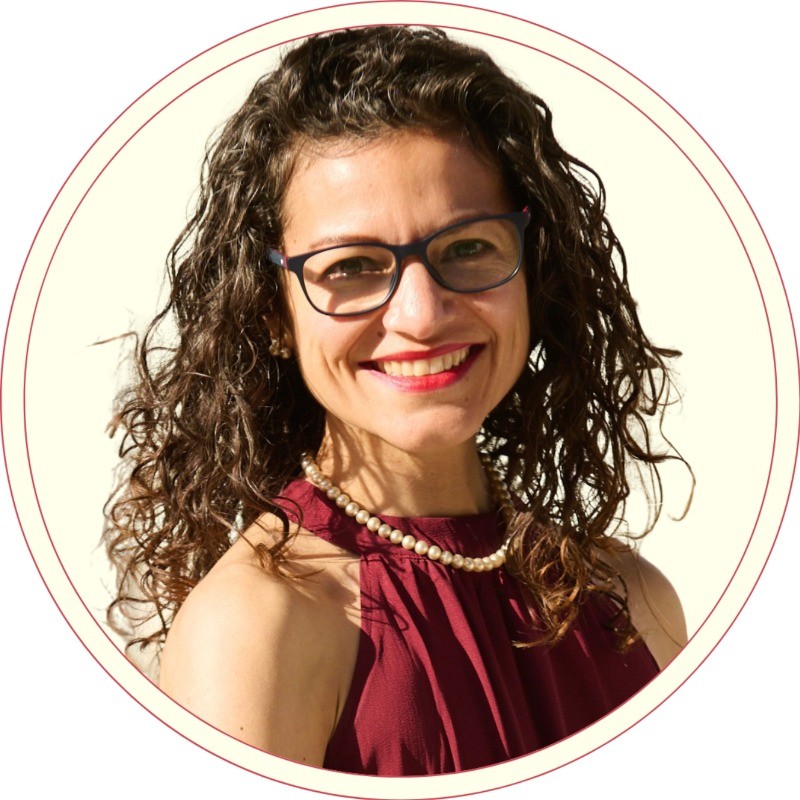
Diana Pineda is an entrepreneur, educator, and author passionate about reimagining education for the next generation. She is the founder of Rhema E-School and NovaQuest Academy. She holds an MBA in Marketing from the University of Greenwich, England. She is a graduate of Universidad Externado de Colombia with a degree in Finance and International Relations and a specialist in Pedagogy and Didactics from Universidad de Medellín.