
The School in the Air
The School in the Air shows that it’s possible to educate our children in a different way—one that values them as individuals and makes them happy.
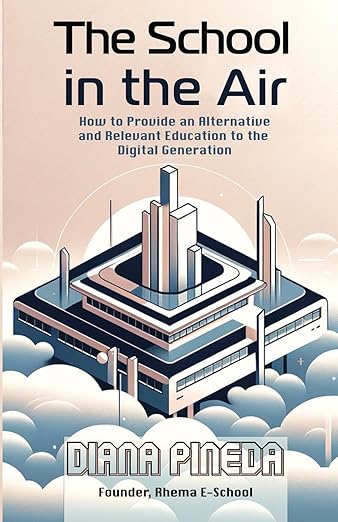
About The Book
Technology has changed everything, transforming how we live, work, and connect… except for education, which seems stuck in time.
Is there another way to educate today’s kids, those who were born with a smartphone in hand and seem to speak a different language?
The School in the Air boldly challenges traditional education, the kind that was designed for a world that no longer exists.
With heartwarming stories and eyebrow-raising data, Diana Pineda takes us on her journey to create a school relevant for the digital generation—a school in the air!
From painting to entrepreneurship, including programming and mindfulness, Diana Pineda shows that learning doesn’t have to be boring and that every child has something unique that will shine if given the chance.
The School in the Air is not just a book; it’s an invitation to think differently, to not be afraid to break the mold, and to give our children the tools to be not just spectators of the future but its creators.
So, if you’re ready to challenge the status quo and take a leap toward an education that truly matters, this book is for you. Get ready to be inspired and, who knows, maybe even to change the world.
“Now more than ever, I feel beyond happy for having made the best decision of our lives: giving our son an alternative education. This book changed the last remnants of my old way of thinking. I’m deeply glad for all the work Diana has been doing and for everything that’s still to come in the field of education. I’m absolutely fascinated by the book and will make sure everyone reads it.”
Laura R.
What’s inside
Chapter 1
Chapter 2
Chapter 3
Chapter 4
Chapter 5
Chapter 6
Chapter 7
Chapter 8
Chapter 9
Chapter 10
Chapter 11
Chapter 12
Chapter 13
Chapter 14
Introduction
“This educational proposal will never be approved,” the government official told me. “Your school is a castle in the air.”
“Perfect,” I replied. “We just need to build a staircase to get there.”
It was 2019, and the head of the Guarne educational district in Antioquia, Colombia, was tearing apart the Institutional Educational Project I had worked on for three years. That document revealed my vision and dream of a different education for my son and many other children.
I wanted to transform education and make it relevant for today’s world. But the official in front of me did not think the same. He had spent decades in his position, clinging to traditional education and defending the archaic laws of Colombia’s Ministry of Education.
If it were up to him, alternative education would not exist.
My battle against the traditional system began when my oldest son, Nicolás, had been a victim of bullying at his school. We tried other schools and I even homeschooled him for a while. By the time he was 15, it was evident that his personality and talents did not fit the educational model he was in, and he got himself expelled from school.
Nicolás was not interested in social sciences or literature. His passion was music. He had been playing the drums since he was eleven, and he composed music, too. He also had a knack for business—especially sales.
From the age of 15, Nicolás never set foot inside a school again. In the following years, he dedicated himself to learning to play guitar and piano. He learned to write songs and rap, which is currently his primary style. At the same time, he started several businesses and learned about entrepreneurship.
When he was 19, he obtained his high school diploma and graduation certificate by taking the ICFES (the state exams in Colombia). To prepare for that exam, he took a three-month course and took the tests.
Today, at 26, Nicolás works remotely as a salesman for a Canadian company, has his own music band (called 1170.music), and he records videos, and performs at concerts. He also has a tourism business.
Nicolás’s gifts and talents were not being seen and developed in school. The traditional system, where everyone learns the same thing regardless of their tastes or abilities, failed him. That’s why as parents, we supported him in everything—although it was a shock at first—and gave him the tools we could for him to be successful in the life he wanted to design for himself.
That experience served me, too, when I decided to homeschool Daniel, my younger son. The years of home education with Daniel were about discovering his tastes and what he was good at. That involved exposing him to different disciplines, not just those he would see in a traditional school.
We discovered that Daniel was good at computer programming and liked horses, chess, and table tennis. However, he didn’t like soccer or any team sports. Eventually, he found his greatest passion: dance.
It would have been almost impossible for him to discover all this while in a traditional school. Most young people leave school without any idea what they want to do with their lives. The reason is that they have not been exposed to a wide range of possibilities but instead have been limited by a curriculum focused on hard sciences.
I shared the curriculum I created for Daniel with other homeschooling parents. I then began to study and research different educational methods and advise families about homeschooling.
The results with my children and with the families I helped convinced me that I had to do something so that many more children and young people could develop their gifts and talents and be happy learning. The school stage should be a time when children and young people enjoy themselves, but most are bored in their schools.
The idea of a different type of school emerged in my mind, and I began to write a project on alternative education. I specialized in pedagogy and didactics at the University of Medellin, and there, I developed my educational project even further. This was the project I presented to the head of the Guarne district, which he refused to accept. But I would not give up, so I had to find another way.
For months, I knocked on the doors of the government, from the local and regional levels to the Ministry of Education of Colombia. But fighting against the system appeared to be a losing battle.
So, I decided to create my own school of alternative education, Rhema E-School, even without government approval. Four years later, we are the first E-School serving Latin America with a different style education that focuses on life skills.
Transforming Education
“Education does not need to be reformed, it needs to be transformed.” — Sir Ken Robinson
Transforming the education system is not easy. Not only because education (like health) is something that modern citizens consider a fundamental right (so much so that governments feel obliged to regulate it), but because that system is itself a cycle that perpetuates from generation to generation.
What do I mean by that? Many parents expect their children to be educated as they were educated, and that is what they demand.
In recent years, I have spoken with hundreds of parents who are curious about alternative education. But when their children begin to receive this new type of education, they get nervous and ask why we don’t teach traditional education subjects—or why we teach art, culinary arts, or entrepreneurship.
I remember one case where a mother asked me why we were teaching graphic design, which was never taught at her school. This mom wanted her daughter to memorize the rivers and capitals of the world, just the way she had been made to memorize them. In her way of thinking, European hydrography was more important than graphic design.
Why? Because that’s how she was educated, in an educational system that values data memorization over creative disciplines.
Education must be transformed to be an education for life, not for academia.
Memorizing the rivers of Europe has no practical value for 99.99% of students. First, anyone can look up the names on the internet when needed. Second, it is very unlikely that this information is required to get a job or start a business.
In contrast, knowing graphic design opens doors to many jobs, is a useful skill for any entrepreneur, and develops creativity and critical thinking, among other things.
In one of the most viewed TED talks, Sir Ken Robinson rightly states that traditional education is only good for one thing: to create academics or teachers. Traditional education has very few practical elements for life, other than basic arithmetic and the ability to read and write.
Today’s society needs more than those basic skills learned in elementary school. Society needs thinking beings, with emotional intelligence and soft skills; creative beings who use their imagination to solve problems using elements of science, technology, and the arts; beings who know what they want because they were given the opportunity to explore their passions and develop their gifts and talents while growing up.
So, how then do we transform education?
Some brave ones try to transform it from within. It is a slow and subtle process of teachers in traditional schools who go beyond the established curriculum and give their students new and different tools. Others are officials who try to implement gradual reforms in their schools or school districts.
Some have achieved great changes, like the educators in Finland, a small country that took on the task of experimenting with new educational models and has achieved great success.
Among the parents dissatisfied with traditional education, we find several efforts:
- Homeschooling, where parents educate their children.
- Unschooling, where children do not go to any school nor follow a program at home (learning is organic, in everyday life).
- Community projects of alternative education, where several families come together to teach their children what they know.
Finally, there are alternative pedagogies, adopted by existing schools or that emerge in new educational institutions based on these new pedagogies. Just like emerging companies, these alternative schools create a new category of education and enter the market trying to capture the minds and hearts of more people at once.
In other words, education is transformed through education.
In my mission to transform education, I not only educate my students but also their parents and relatives. After developing the TEAM methodology and creating the category of the e-school, we wrote articles, made videos and infographics, and distributed them on social media, by email, on our website, and now in this book.
Educating the world about the e-school has required me to tell my story over and over again, explaining the advantages of alternative education and the disadvantages of traditional education. And above all, showing results. The students and families who have gone through Rhema E-School are a testament to the transformation that is possible when we focus on developing the gifts and talents of children instead of preparing them for 12 years to respond to a state exam and receive a diploma.
This book contains many of those stories, describes the TEAM methodology, and how we are transforming education to be relevant for today’s generation, the native digitals.
Where possible, I have cited studies that have been done in different parts of the world, but the truth is that very few researchers have dared to question the traditional methods of education. That’s why I include many stories and results from my own research—meaning, the observations of my students and their educational processes.
This is not an academic book meant to impress whoever reads it. It is rather a manifesto, a call to action for parents who want a different—not just better—education for their children.
My wish is that by reading the following pages, you can transform your way of thinking about education—or as the parents of Rhema E-School often say, “change the chip.” That is the first step toward a real transformation of education.
As the government official said a few years ago, this concept of alternative education is so novel and ambitious that it seems like a castle in the air. Well, we have already built a staircase, and I invite you to be part of this vision. Will you join us?
Chapters
Pages
About the author.
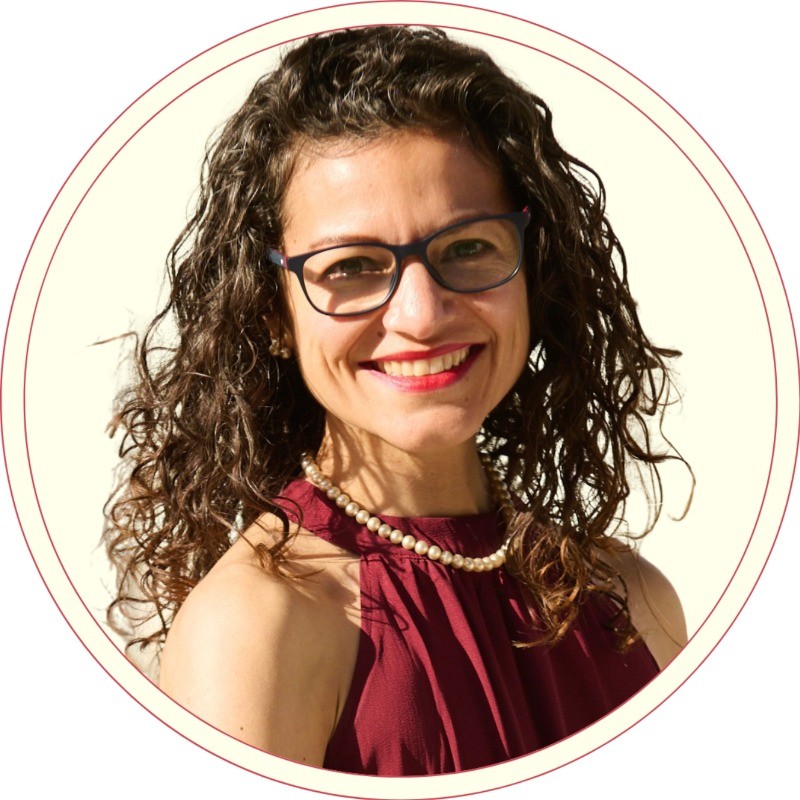
Diana Pineda is the founder of NovaQuest Academy. Passionate about education and devoted to children, her goal is to revolutionize learning to raise happy citizens who transform their communities.
Diana graduated from Universidad Externado de Colombia with a degree in Finance and International Relations, and from Universidad de Medellín with a degree in Pedagogy and Didactics.
A true multipotentialite, Diana has lived in five countries and pursued several professional paths—from sales director at a telecommunications company to Zumba instructor. As an entrepreneur, she has founded multiple ventures, the most important of which is NovaQuest.
She has two adult children and lives with her husband in London, UK.
Diana Pineda