

My Story as a Multipotentialite
When I was a teenager, I thought there was something wrong with me.
At home, everyone was one thing: my dad was an accountant, my mum was a businesswoman, my uncles had their careers, my aunts were homemakers, my brother was devoted to the arts, and my little sister studied business administration.
I couldn’t understand why, if my mum could be everything at home, daughter, sister, mother, aunt, cousin, I wasn’t allowed to be everything professionally too.
I’ll tell you what happened next.
Many Children Today Are Multipotentialites
This is the reality for many children today:
- They want to do everything because they have multiple gifts and talents.
- They want to solve problems across different disciplines, and parents often can’t see how that’s possible.
- These children are called multipotentialites.
What Is a Multipotentialite?
A multipotentialite is someone who can’t choose just one thing and wants to be everything across the course of their life.
They have multiple interests and deep knowledge across very different, often contrasting subjects.
Think of the great figures of the Renaissance, who knew art, astronomy, chemistry, and philosophy, and were inventors and statesmen all at once.
A multipotentialite is a curious person who isn’t afraid to explore and study topics from unrelated fields.
What Is an Example of a Multipotentialite?
Leonardo da Vinci painted the Mona Lisa, designed flying machines, studied anatomy, and wrote music.
Benjamin Franklin was a statesman, scientist, inventor, and writer.
Steve Jobs blended technology and art to reshape how we live.
Sir Richard Branson built businesses in music, aviation, telecoms, and space travel.
What they shared was an inability and an unwillingness to be just one thing.
How to Know If Your Child Is a Multipotentialite: Practical Signs
Many parents ask: How do I tell the difference between a curious child and a multipotentialite?
Here is a short checklist:
- They switch interests quickly but explore each one with real intensity.
- They make unexpected connections between completely different subjects.
- They struggle to answer “What do you want to be when you grow up?”
- They enjoy both arts and sciences equally.
- They may start several projects at once, or dive deeply into one for months before moving on to the next.
What Are the Three Multipotentialite Superpowers?
According to Emilie Wapnick, author of How to Be Everything, doing many things does not mean being mediocre at all of them.
Multipotentialites have real superpowers:
1. Idea synthesis
When a problem needs a fresh solution, it’s often someone from outside the discipline who delivers a truly innovative idea.
2. Rapid learning
Because multipotentialites know what it feels like to be a beginner, they pick things up quickly and act on them faster than most.
3. Adaptability
Having started many things across their lives, they are comfortable with change, new technologies, and shifting economies.
The Problem with Specialisation
When a child who wants to do everything meets a world built around specialisation, frustration follows.
They feel there is no place for them and that they must reshape themselves to fit.
What their parents tell them (with the best of intentions), what school teaches, and what everyone around them expects.
I have nothing against specialising.
If I need open-heart surgery, I want a cardiac surgeon, not a GP.
But in a broader sense, learning a great deal about many different things is the natural way children learn.
How to Help a Multipotentialite
Children are naturally brilliant.
They want to know everything, they ask about everything, and so they want to be everything.
They play at being doctors, firefighters, and police officers.
They make TikToks, animations, and YouTube videos.
They write code in Scratch or CodeCombat.
They build different skills every day, often without their parents even noticing.
What to Do as Parents
I know it can be frustrating to watch your child leap from one interest to another, starting projects and then starting more.
But this is not a lack of discipline.
It is simply a different way of learning.
If your child is a multipotentialite, the best thing you can do is let their creativity and imagination run free.
Support them when they want to try something new.
Let them explore and experiment so that, as they grow, they can find their true passions.
Types of Multipotentialites
There are children who want to do everything at once.
They begin one project, then another, then another.
To a parent’s eyes, it can look as though they are leaving things unfinished.
But they are not.
They are perfectly capable of managing several interests simultaneously.
This is how their critical thinking works.
1. They are the simultaneous multipotentialites.
Then there are children who start something, complete it, and move on to the next thing.
They devour everything written on a subject for weeks, months, or years.
Then one day, they feel they know enough and shift their focus entirely.
2. These are the sequential multipotentialites.
And this pattern appears not only in Generation Z and Generation Alpha but is also just as common among adults.
Challenges Multipotentialites Face
If you are one of them, there is nothing wrong with you.
Your brain simply is not a specialist brain; it is a multipotentialite brain.
You are normal.
You just have many passions.
That said, in adult life, these patterns are not always well-received:
- Work: A CV showing five different roles in five years across completely different sectors does not always make a strong first impression. In the specialised world we live in, multipotentialites need to learn how to frame their breadth as a strength.
- Self-esteem: According to Wapnick’s book, multipotentialites often carry guilt and shame for being unable to stick to one interest. Being a perpetual beginner and facing criticism from well-meaning friends takes a toll on their sense of self.
Is Being a Multipotentialite a Good Thing?
Absolutely.
Beyond the three core superpowers, multipotentialites also tend to:
- Think holistically: Because they hold knowledge across many fields, they naturally step back and see the bigger picture rather than getting stuck in the details.
- Connect with others: Multipotentialites often relate to people from very different backgrounds and creatively apply insights from one world to another.
What Skills Do Multipotentialites Have?
Their skill set tends to span across categories that specialists might lack:
- Cross-disciplinary thinking and creative problem-solving
- Fast learning and quick execution in new environments
- Resilience in the face of change and uncertainty
- Strong communication and empathy across different contexts
- Innovation, especially when bridging fields that rarely meet
The Future Needs Multipotentialites
In today’s world, multipotentialites have a place.
They are becoming increasingly essential.
- Technology companies and start-ups actively value people who can bridge disciplines.
- Innovation comes from those who bring ideas from other fields.
- Globalisation and AI are making adaptability more important than extreme specialisation.
If your child is a multipotentialite, it is an advantage.
They are developing exactly the skills the future needs.
My Child Is a Multipotentialite
If reading this has made you realise that you or one of your children might be a multipotentialite, do not worry.
Yes, we live in a specialised world.
But we also live in a globalised one.
That gives all of us the opportunity to discover, learn, and develop our gifts in any corner of the world, with communities we could never have imagined.
At NovaQuest Academy, we understand this.
That is why we work in rotating learning hubs every three months:
- Technology
- Entrepreneurship, and
- The Arts, with subjects that are different but deeply interconnected.
We believe that before a child becomes a box of knowledge, they need to become a human being who knows themselves and knows what they want, whether that is one thing or many.
Give them the opportunity to explore everything.
My Own Multipotentialite Life
When children are young, it is the perfect time to try everything without major consequences.
And if someone asks your child, “What do you want to be when you grow up?”, help them answer: “My child will be a wonderful person who solves many problems for many people, in whatever field they love.”
Or simply let them say: “I’m a multipotentialite.
That means I have many passions and I’m going to do everything I want.”
And tell them they are following in the footsteps of Leonardo da Vinci, Benjamin Franklin, Steve Jobs, and Sir Richard Branson.
How the Story Ends
Today I am “grown up”.
But looking back, I have lived many lives.
- I have been a daughter, a wife, a sister, a cousin, a friend, and a mother.
- But I have also been an employee, an owner, an entrepreneur, and unemployed.
- I studied two degrees in one: Finance and International Relations.
- I worked at the World Trade Centre as an ambassador for Colombian businesses negotiating with Asia, and then at the Ministry of Foreign Affairs.
- I led a Christian church.
- I taught investment and stock market courses at the university.
- I gave Spanish lessons to bankers.
- I homeschooled my children.
- I have lived in five countries and 13 cities.
- I dance, sing, and play the piano.
- I am a bodybuilder.
- I fell in love with marketing while working at a media company.
- I have done all of this and just finished an MBA here in London. And there is still so much ahead of me, I am only 52!
Long live the multipotentialites.
What You Can Do Next
Being a multipotentialite is a superpower, not a problem.
And if you have a child like this, you are not alone.
There are families just like yours who believe in a different kind of education.
At NovaQuest Academy, we open enrolments every term for curious, creative children.
We have built a community where every talent counts, is valued, and is nurtured.
Find out if this is the right place for your child.
Register your interest here.
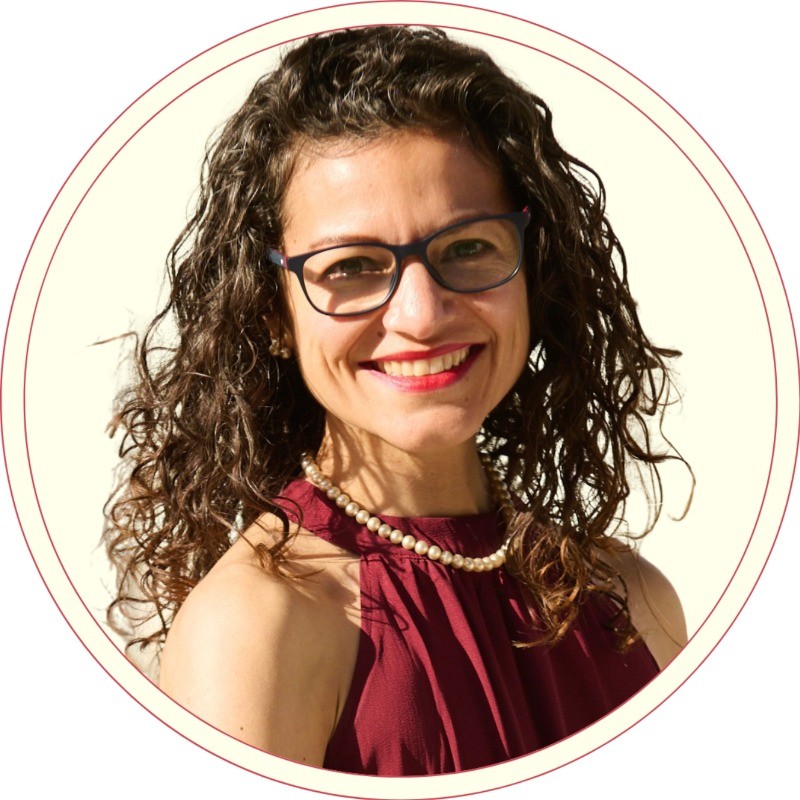
Diana Pineda is an entrepreneur, educator, and author passionate about reimagining education for the next generation. She is the founder of Rhema E-School and NovaQuest Academy. She holds an MBA in Marketing from the University of Greenwich, England. She is a graduate of Universidad Externado de Colombia with a degree in Finance and International Relations and a specialist in Pedagogy and Didactics from Universidad de Medellín.