
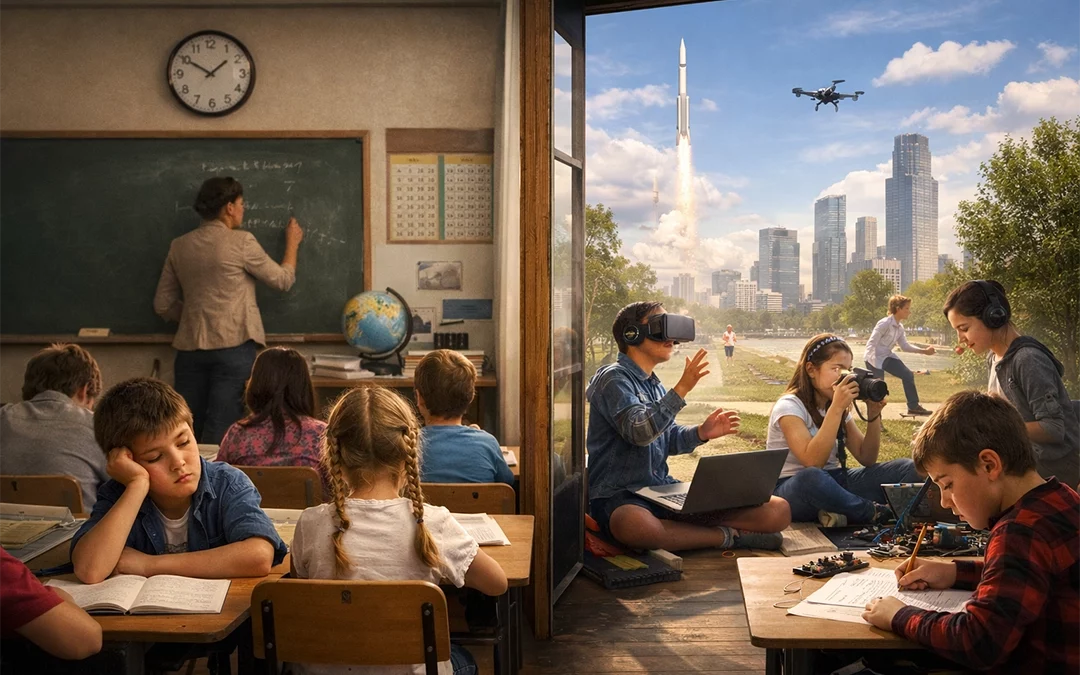
Across the world, more and more parents are asking the same question: Why does school feel increasingly disconnected from how children actually learn, and from the world they are growing into?
Many families start searching for alternative education because they sense something is not working.
Their children may be bright but disengaged, creative but constantly corrected, curious but bored.
Yet something interesting often happens once parents explore alternatives:
They ask for the very same elements that define mainstream schooling.
- Heavy memorisation of content
- Standardised testing is the main measure of success
- Academic material designed primarily to pass a course or exam
None of these things is automatically wrong.
A growing discomfort among parents
Memorising multiplication tables, for example, still matters.
Exams still play a role in university access.
Academic knowledge has value.
Many children are academically inclined, but in subjects other than traditional ones.
The problem starts when these (mainstream schooling elements) become the core purpose of education rather than tools within a broader learning experience.
Parents want innovation, but often expect it to look exactly like what they themselves experienced.
This tension sits at the heart of today’s education debate.
Mainstream education was built for a different world
Most mainstream education systems were designed during the industrial era.
They were created to produce literate, disciplined citizens capable of functioning in structured workplaces.
- Rows of desks.
- Bells.
- Standardised curricula.
- Same-age groups moving at the same pace.
That model made sense when:
- Information was scarce.
- Teachers were the primary source of knowledge.
- Careers followed predictable paths.
- Society valued uniformity and compliance.
That world no longer exists.
Students today live in a radically different environment.
One where knowledge is accessible instantly, skills evolve rapidly, and work is increasingly digital, creative, and entrepreneurial.
UNESCO has repeatedly highlighted this mismatch, noting that education systems must move away from narrow academic transmission toward lifelong learning, adaptability, and human development.
Yet many classrooms still operate as if information were scarce and memorisation were the highest form of learning.
Analogue education in a digital world
Children growing up today, often referred to as Generation Z and Generation Alpha, are digital natives.
Their relationship with information is fundamentally different from that of previous generations.
They learn by exploring, watching, experimenting, collaborating, and creating.
Mainstream education, however, remains largely analogue in structure:
- One teacher controls the pace.
- One curriculum for all learners.
- One correct answer.
- One test to measure everyone.
This mismatch creates friction.
The issue is not that students lack discipline or attention.
It is that they are being asked to learn through systems that feel unnatural to the way they interact with the world outside school.
Educational psychologist Sir Ken Robinson famously argued that schools often suppress creativity through standardisation and conformity rather than cultivating it.
When children experience learning as passive reception rather than active discovery, motivation declines.
The core problem: preparing students for a world that no longer exists
The most uncomfortable truth is also the simplest.
Mainstream education often prepares children for jobs, environments, and societal structures that are disappearing or rapidly changing.
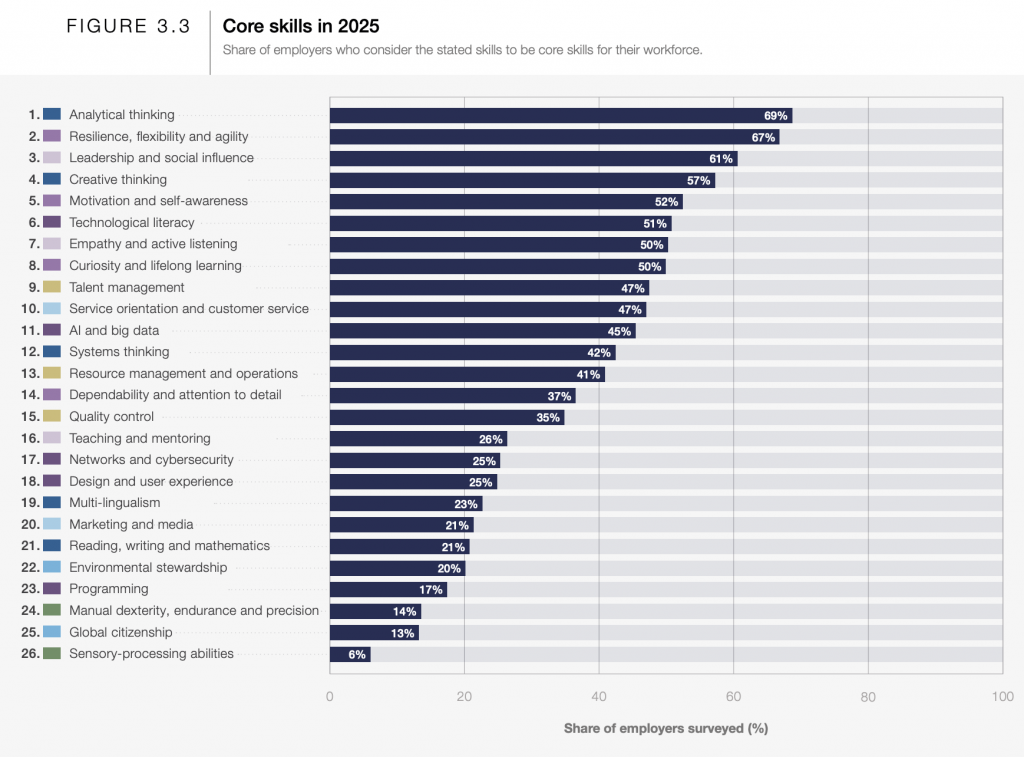
The World Economic Forum’s Future of Jobs Report repeatedly identifies skills such as:
- Analytical and critical thinking.
- Creativity.
- Problem solving.
- Self-management and active learning.
- Technology and digital literacy
As central to the future workforce.
Notice what is missing from that list: memorising facts for exams.
Knowledge still matters, but the ability to apply knowledge in changing situations matters far more.
Students who spend years being evaluated mostly on recall can struggle when they enter environments that reward experimentation, collaboration, and initiative.
Narrow focus: when subjects become silos
Mainstream education tends to separate learning into rigid subjects:
- Maths happens here.
- English happens there.
- Science stays in its box.
Real life does not work that way.
Running a business, creating a product, leading a project, or even solving everyday problems requires multiple skills at once:
- Communication
- Numerical reasoning
- Creativity
- Emotional intelligence
- Digital fluency
Alternative learning models increasingly use interdisciplinary projects to mirror real-world complexity.
Research from the Harvard Graduate School of Education highlights that deeper learning emerges when students apply knowledge to authentic problems rather than isolated tasks.
Learning shifts from knowing about something to using knowledge to create something.
The one-size-fits-all problem
Perhaps the biggest weakness of mainstream schooling is its assumption that most students should learn in roughly the same way and at the same pace.
But children are not standardised products.
Some learners thrive through:
- Movement and hands-on experimentation.
- Visual storytelling.
- Collaboration.
- Independent exploration.
- Creative production
Others excel in structured academic environments.
The difficulty appears when one model is presented as the “correct” way to learn.
Students who do not fit the system are often labelled:
- Distracted
- Underperforming
- Unmotivated
When, in reality, they may simply learn differently.
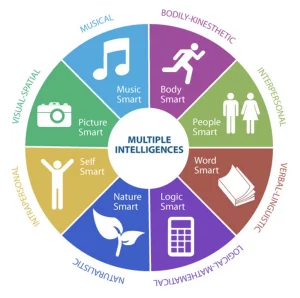
Educational researcher Howard Gardner’s theory of multiple intelligences challenged the idea that intelligence can be captured by a single narrow academic measure, arguing instead for diverse forms of intelligence.
A standardised system struggles to accommodate this diversity.
Standardised testing: measurement vs learning
Assessment exists for a reason.
Parents and universities need ways to evaluate progress.
The problem arises when assessment becomes the driver of learning rather than its reflection.
Standardised tests tend to reward:
- Speed
- Memorisation
- Pattern recognition within familiar formats
They often struggle to measure:
- Creativity
- Collaboration
- Long-term thinking
- Entrepreneurial thinking
- Real-world problem solving
OECD discussions around global education trends have highlighted growing concerns that systems heavily focused on testing may limit innovation and student engagement.
Students quickly learn what matters most: what is tested.
Everything else becomes optional.
What alternative education is doing differently
Alternative education does not reject academic content.
Instead, it reimagines how learning happens.
Across the world, we see the rise of:
- E-schools and online academies
- Micro-schools
- Boutique learning environments
- Project-based models
These approaches often keep the required academic subjects but redesign the experience around:
- Projects instead of worksheets
- Collaboration instead of isolation
- Application instead of memorisation
- Feedback instead of grades alone
Learning becomes something students do, not something they passively receive.
A simple example: how the same subject can feel completely different
Imagine a language arts lesson.
Traditional approach:
Students read a classic author → complete comprehension exercises → sit an exam.
Alternative approach:
Students read authors they connect with → discuss themes → write collaboratively → revise with peer feedback → publish or present their work.
The difference is not just the method.
It is identity.
Students move from consumers of content to creators.
When learning produces something real, such as a story, a presentation, a project, or a product, motivation changes.
The point is not to criticise the teacher.
Most educators work extremely hard within the constraints they are given.
The bigger issue is structural.
Education systems tend to reproduce themselves.
Policies, curricula, teacher training, and assessment models reinforce familiar patterns.
OECD reports often describe how institutional systems naturally resist rapid change because stability is prioritised over experimentation.
As a result:
- Curricula change slowly.
- Pedagogy evolves slowly.
- Innovation remains local rather than systemic.
Students move faster than the system itself.
The generational gap in expectations
Parents over 35, including many of us, experienced a version of schooling that generally worked for our economic context.
Good grades → university → stable career.
For many young people today, that linear path looks less realistic:
- University costs continue rising.
- Careers change rapidly.
- Skills become outdated faster.
- There are not enough jobs.
Young adults increasingly pursue alternative pathways:
- Online courses and specialised certifications.
- Creator-based careers.
- Freelancing and entrepreneurial work.
- Digital commerce and online businesses.
Education systems built for stability now face students preparing for uncertainty.
What students are already doing outside school
Whether adults approve or not, digital natives are shaping their own learning environments.
Some learn:
- Video editing and storytelling through YouTube.
- Design and marketing through social media.
- Coding through online communities.
- Entrepreneurship through small digital ventures.
These experiences often teach:
- Self-direction
- Audience awareness
- Iteration through feedback
- Practical problem solving
Ironically, many of these skills align more closely with future workforce demands than traditional classroom tasks.
The emotional cost of the current model
When education narrows success to grades and standardised outcomes, many students internalise a damaging message:
If you don’t fit the system, something is wrong with you.
This can lead to:
- Loss of confidence
- Reduced curiosity
- Fear of mistakes
- Passive learning habits
Yet innovation depends on experimentation, and experimentation includes failure.
Learning environments that allow students to try, fail, adjust, and try again often build resilience rather than anxiety.
My mission as an educator
As a parent and educator, my perspective evolved through experience.
Mainstream education worked for many of us because it aligned with the realities of our time.
But our children are growing up in a different world.
They don’t need to memorise information that is permanently available online.
Children need to:
- Understand how they learn.
- Develop real-world skills.
- Solve meaningful problems.
- Build agency and responsibility.
- Learn through action.
Education should help children discover who they are, not simply train them to pass tests.
What should be the purpose of education?
At its best, education should develop citizens who are:
- Functional in modern society.
- Emotionally healthy.
- Economically capable.
- Socially responsible.
- Able to contribute creatively and ethically.
Yet many students leave school feeling disconnected from learning itself.
When education prioritises compliance over curiosity, students may achieve grades but lose intrinsic motivation.
That is a high price.
What needs to change
Real transformation will not happen through small tweaks.
Change requires rethinking several layers at once:
1. Curriculum
Content must connect with real-world challenges, digital literacy, and future skills.
2. Methodology
Project-based and experiential learning should complement academic foundations.
3. Assessment
Portfolios, presentations, and applied work need to sit alongside exams.
4. Technology
Tools should support creativity and collaboration, not simply digitise worksheets.
5. Mindset
Parents and educators must move beyond the idea that school should look exactly as it did in the past.
A realistic perspective: mainstream education is not broken for everyone
Some students thrive in structured, academic environments.
Mainstream schools continue to work well for many families.
The issue is not replacing one system with another.
It is recognising that no single system can serve every learner equally well.
Education needs plurality.
Children deserve options that align with who they are and how they learn best.
The question parents are starting to ask
Parents today are becoming more reflective and more sceptical:
- Is my child learning to think or to repeat?
- Are they building skills for real life?
- Are they developing confidence and agency?
- Do they enjoy learning, or just endure it?
These questions matter because education shapes not only careers but identity.
Looking forward
The future of education will likely not be one dominant model.
Instead, we may see:
- Flexible hybrid learning.
- Smaller learning communities.
- Personalised pathways.
- Entrepreneurial and creative education.
- Lifelong learning ecosystems.
Schools that survive and thrive will be those willing to adapt to how students actually learn, not how systems prefer to teach.
Final thoughts
Mainstream education is not failing because teachers lack dedication or because children have got worse.
It struggles because the world has changed faster than the system.
Education built for conformity now serves a generation that values creativity, autonomy, and relevance.
The goal is not to reject academic knowledge.
The goal is to create learning environments where knowledge becomes action, where students move from memorisers to thinkers, builders, and problem-solvers.
And that begins with one simple question: Are we preparing children for the past… or for their future?
If you’re a parent reflecting on your child’s learning journey, you are not alone.
Education is evolving, and the conversation about what truly matters has only just begun.
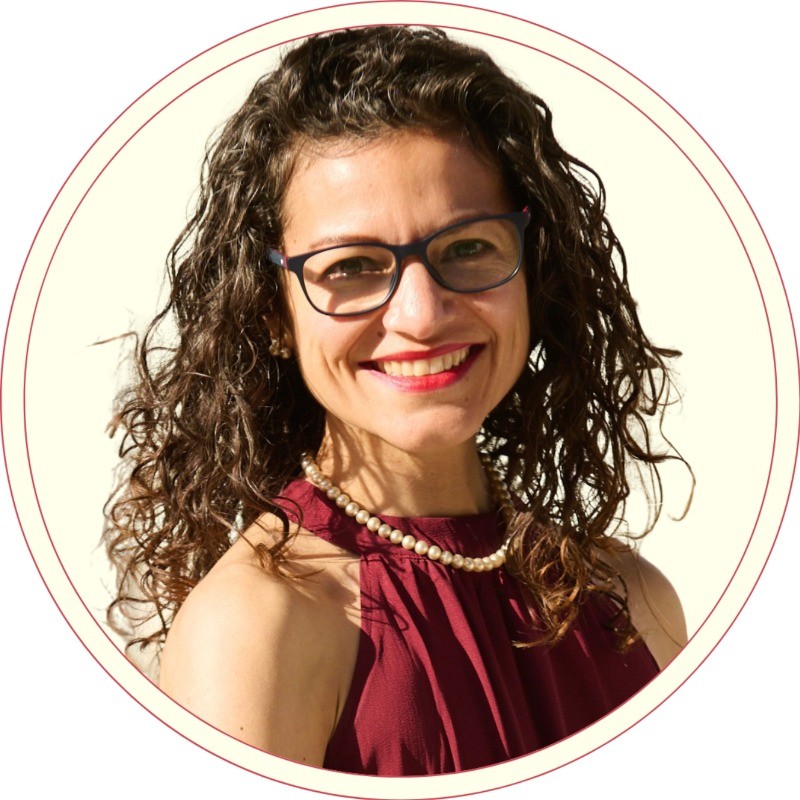
Diana Pineda is an entrepreneur, educator, and author passionate about reimagining education for the next generation. She is the founder of Rhema E-School and NovaQuest Academy. She holds an MBA in Marketing from the University of Greenwich, England. She is a graduate of Universidad Externado de Colombia with a degree in Finance and International Relations and a specialist in Pedagogy and Didactics from Universidad de Medellín.